
1. Rising Water Temperatures
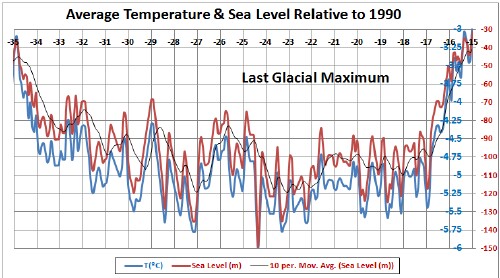
As air temperature increases, it causes ocean temperature to increase. Starting at the surface, then deeper with time as water mixes, the water will warm and expand. This causes the water to expand through thermal expansion. Thermal expansion was a major source of sea level rise after the Industrial Revolution and is estimated to be responsible for 2.5 cm of rise during the second half of the 20th century.
2. Melting of Land Ice
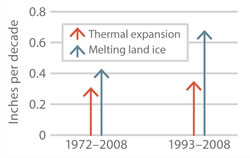
Global temperature continues to rise, and the rate at which Land Ice is melting has increased. Land Ice is the grouping for glaciers, ice caps, and ice sheets. As these ice formations continue to melt, it adds the "new" water to the world's oceans. Melting of land ice was responsible for a little more than 50% of the total increase from 1993 - 2008, but has been more recently responsible for over 75% between 2003 - 2007. Areas such as Greenland and Antarctica have the largest total land ice on the planet.

3. Land Subsidence
The other two issues are what causes the sea level to fluctuate globally, but sea level rise can change at a local rate as well. This effect is due to land sinking, or subsiding. Land subsides due to many natural actions, but it is also affected by the melting of land ice. Naturally, land subsides in the ongoing process of tectonic plates moving. Melting of land ice causes a shift in pressure of land mass, allowing it to subside more quickly.